
If you’re shopping for a newborn swaddle or baby sleep sack, you’ve probably come across the term TOG rating.
Most guides will tell you to “pick the right TOG,” but the reality is that TOG is only one small piece of the puzzle when it comes to safe newborn sleep.
Understanding how TOG works, and how it applies specifically to newborn swaddles, can help you make safer, simpler, and more confident decisions for your baby.
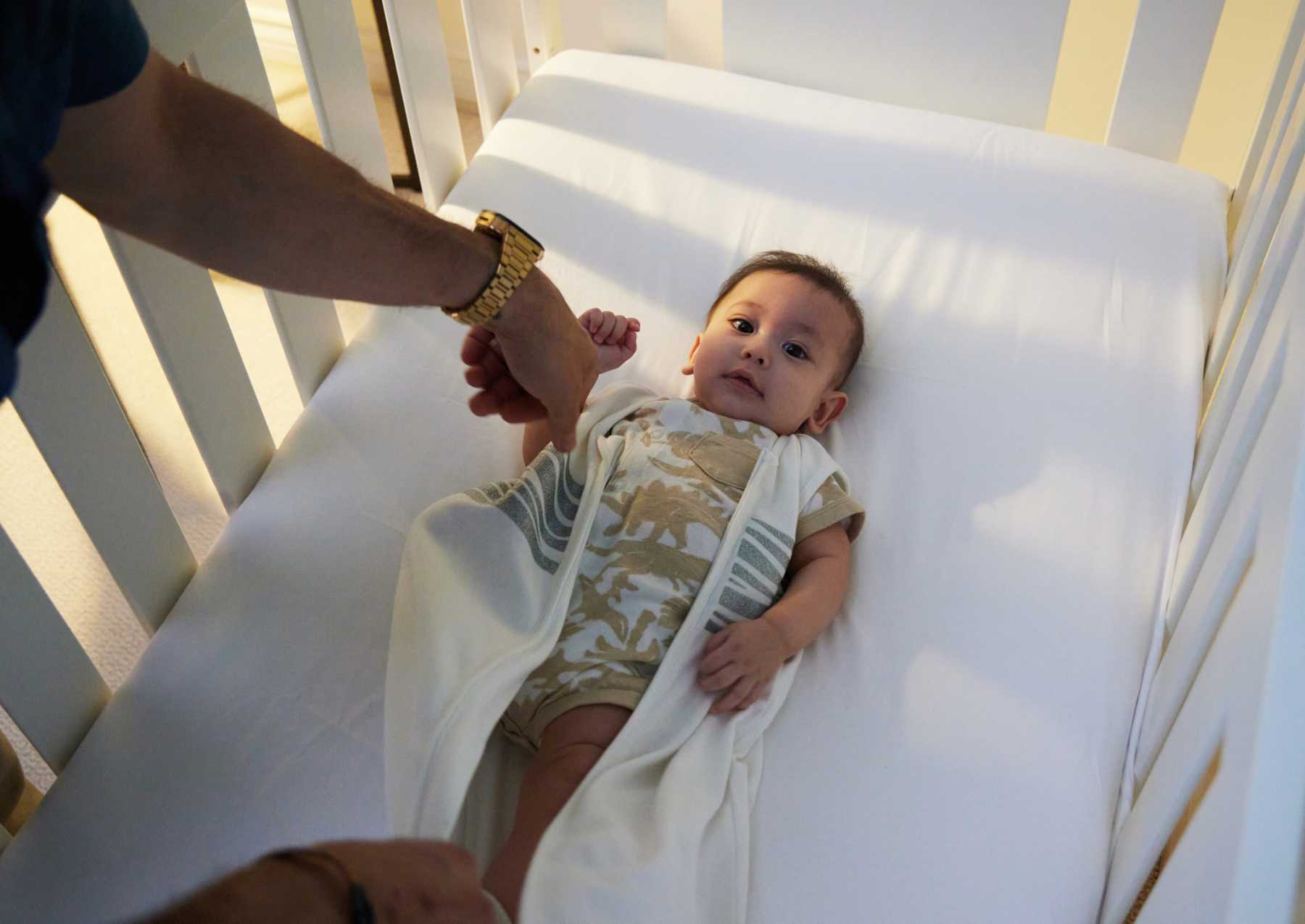
What Does TOG Mean for Newborn Swaddles?
TOG (Thermal Overall Grade) is a measure of how much warmth a fabric provides. You’ll commonly see TOG ratings like 0.5, 1.0, 2.5, and 3.5 when shopping for newborn swaddles and sleep sacks.
The higher the TOG, the more heat the fabric is designed to retain. While that sounds helpful, it often leads parents to believe they need different swaddles for different temperatures.
The Biggest Mistake Parents Make With Newborn Swaddles
Many parents assume they need multiple swaddles with different TOG ratings to match every season or room temperature.
In reality, the most important factor is not the TOG rating—it’s your baby’s core body temperature.
Newborns cannot regulate their temperature well. They are also more vulnerable to overheating than being too cold, and they may not show clear signs when they are too warm. This means that relying too heavily on TOG charts can sometimes lead to overdressing.
Why a 0.5 TOG Newborn Swaddle Is Often the Best Choice
A simpler and safer approach is to start with a lightweight 0.5 TOG newborn swaddle and adjust warmth using layers underneath.
This gives you flexibility in real-life situations. If the room is warm, your baby can wear just a diaper or a light onesie underneath. If the room is cooler, you can add a footed sleeper or an extra layer.
Instead of switching between multiple swaddles, you stay in control by adjusting what your baby wears underneath. This layering approach is one of the most practical ways to manage your baby’s comfort safely.
Newborn Swaddling and Overheating
Overheating is a known risk factor associated with Sudden Infant Death Syndrome.
Newborns do not always wake or cry when they become too warm, which makes overheating especially important to prevent. This is why many safe sleep recommendations emphasize maintaining a comfortable room temperature and avoiding overly heavy sleepwear.
Using a lightweight swaddle can help reduce the risk of your baby becoming too hot during sleep.
You Don’t Need Multiple TOG Swaddles
Despite what many product guides suggest, you don’t need a collection of swaddles in different TOG ratings.
A single lightweight swaddle, combined with thoughtful layering, can work across seasons, different room temperatures, daytime naps, and overnight sleep.
This approach is not only simpler, but also safer and more cost-effective for families.
How to Tell If Your Newborn Is Too Hot or Cold
Instead of relying on charts, it’s better to check your baby directly.
The most accurate places to check are your baby’s chest or the back of their neck. Hands and feet are not reliable indicators because they are often cooler, even when your baby’s core temperature is just right.
If your baby’s chest feels warm and slightly sweaty, they may be too hot. If it feels cool, you may want to add a layer.
What TOG Actually Measures
TOG is based on laboratory testing that measures how well a fabric retains heat. The material is placed over a heated surface, and the amount of heat lost is used to calculate its insulation value.
While this provides a standardized rating, it doesn’t reflect real-life conditions. TOG does not account for layering, room airflow, humidity, or your baby’s individual metabolism.
This is why parental awareness and observation are far more important than strictly following a TOG chart.
Choosing the Right Newborn Swaddle
When selecting a newborn swaddle, it’s best to focus on breathable materials, a lightweight design, and the ability to layer underneath.
Organic cotton is often preferred for being chemical-free and having great breathability, especially for newborn skin. A snug but comfortable fit is also important for both safety and sleep quality.
Some newer sleepwear designs also aim to reduce parental anxiety by making it easier to observe a baby’s breathing during sleep. If you’re exploring options, brands like Sleep of Mind offer swaddles designed with both safety and peace of mind in mind.
We love the Sleep of Mind newborn swaddle, as it’s made with GOTS-certified organic cotton and OEKO-TEX® Standard 100 certified materials, meaning it’s free from harmful chemicals, dyes, and irritants—making it especially gentle on sensitive newborn skin. The breathable fabric helps reduce the risk of overheating while keeping your baby comfortable throughout sleep.
What makes it truly unique is its patent-pending breathing reassurance design, which allows parents to visibly see their baby’s chest rising and falling using their existing baby monitor—offering peace of mind without wires, sensors, or added technology.
It’s a simple, low-tech solution designed to support both safe sleep and reduced parental anxiety—something every new parent can appreciate.

The Bottom Line
TOG ratings can be helpful, but they should not be the deciding factor in how you dress your baby for sleep.
Focusing on your baby’s core temperature, avoiding overheating, and using a lightweight swaddle with adjustable layers is a simpler and safer approach.
In most cases, less is more when it comes to newborn sleepwear. The goal is not to follow a perfect chart, but to create a sleep environment where your baby is comfortable, safe, and able to rest soundly.